
Glaciers of Nepal – Nature’s Ice Giants in the Himalayas
Introduction: What Are Glaciers of Nepal?
Glaciers of Nepal are one of the most amazing natural wonders found in the high Himalayas. When people travel for trekking in Nepal, they often hear about these giant ice formations. Many trekkers are surprised when they see them for the first time because they look like frozen rivers resting on top of tall mountains. But they are not just frozen ice sitting still. They are alive in their own slow way and keep changing over time.
To understand Glaciers of Nepal, think of them as very big rivers made of ice. These ice rivers are formed when snow falls in the mountains year after year. The snow does not melt completely because the weather is very cold. Slowly, the snow becomes hard ice. After many years, this thick ice starts to move very slowly down the mountain. This is what we call a glacier. Even though it moves very slowly, it is still moving like a river.
One interesting thing about glaciers is their slow movement. If you stand and watch a glacier for a few minutes or even a few hours, you will not see any movement. It feels like it is completely still. But in reality, Glaciers of Nepal are always moving, just at a speed so slow that humans cannot easily notice it. Some glaciers move only a few centimeters in a day. This slow movement makes them very unique in nature.
These glaciers are found in the highest parts of Nepal, especially in the Himalayas. Places like the Everest region, Langtang Valley, and Annapurna region are home to many beautiful glaciers. When trekkers go on famous routes like Everest Base Camp or Langtang Valley trek, they often walk close to these massive ice formations. Seeing Glaciers of Nepal during trekking gives people a feeling of being very close to nature in its purest form.
Another important thing to know is that glaciers play a big role in Nepal’s water system. Many rivers in Nepal start from melting glaciers. In the warm season, part of the ice melts and flows down as fresh water. This water becomes rivers that people use for drinking, farming, and daily life. Without Glaciers of Nepal, many rivers in the country would not exist in the same way.
For trekkers, glaciers also add beauty and excitement to the journey. When walking in high mountains, the view of shining white ice, deep valleys, and tall peaks creates a peaceful feeling. Some glaciers are very large and stretch for many kilometers. Others are hidden between mountains and can only be seen from certain trekking paths. Each glacier has its own shape and story shaped by nature over thousands of years.
Glaciers of Nepal are also important because they help us understand how nature works in cold mountain areas. They show how snow, ice, temperature, and time all connect together. Even though they look strong and permanent, they are always changing slowly. This balance of strength and movement makes glaciers one of the most interesting natural features in the Himalayas.
When people learn about glaciers, it becomes easier to understand why the Himalayan region is so important for Nepal and for the world. These giant ice bodies are not just part of the landscape, they are part of life, water, and the environment that supports millions of people living downstream.
Where Are Glaciers Found in Nepal?
Glaciers of Nepal are mostly found in the highest parts of the country, where the mountains are very tall and the weather stays cold all year. These areas are part of the great Himalayan range, which includes some of the tallest mountains in the world. When trekkers travel in Nepal, they usually see glaciers only when they go higher into these mountain regions.
The main places where Glaciers of Nepal are found include the Everest region, Langtang region, and Annapurna region. These areas are famous for trekking and mountain adventures. Each region has its own beauty, culture, and landscape, but one common thing is the presence of large ice formations high in the mountains.
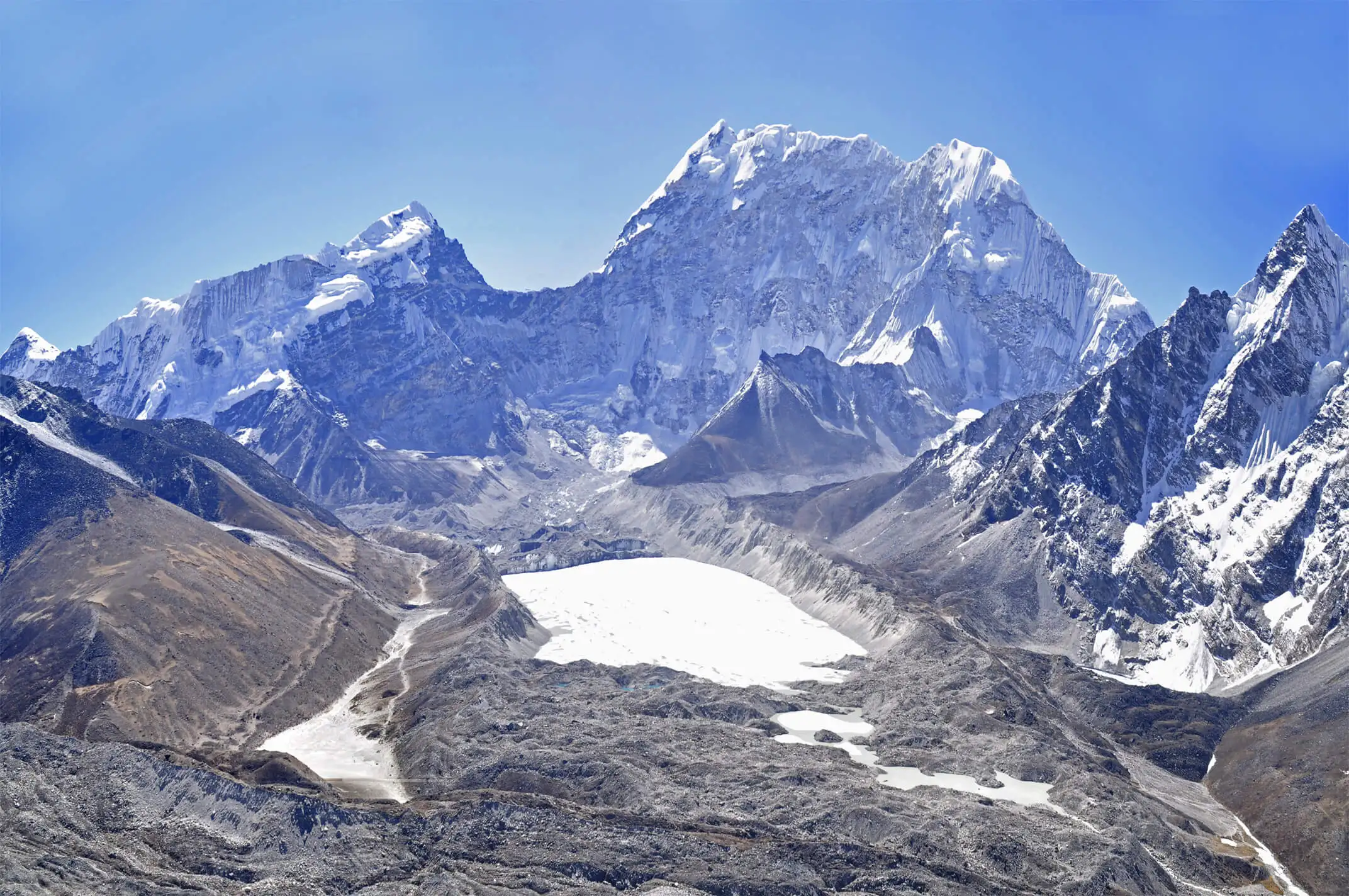
In the Everest region, glaciers are very large and powerful. This is where the famous Khumbu Glacier is located, near Mount Everest, the highest mountain in the world. Trekkers who go to Everest Base Camp often walk close to icy paths and rocky glacier areas. The air is very cold, and the view of snow-covered mountains makes the journey special. In this region, Glaciers of Nepal can be seen stretching between high peaks and deep valleys, slowly shaping the land over many years.
The Langtang region is another important place where glaciers are found. It is closer to Kathmandu compared to other trekking regions, making it popular for short and scenic treks. The Langtang Glacier is one of the main glaciers here. When trekking in this area, people can see how ice and snow mix with green hills at lower levels. As trekkers go higher, the green landscape slowly changes into rocky and icy land. This change shows clearly how Glaciers of Nepal exist only in high and cold places.
The Annapurna region also has many beautiful glaciers hidden among its tall mountains. Treks like the Annapurna Base Camp trek take people close to snow-covered peaks and glacier-fed valleys. The glaciers here help create rivers and waterfalls that flow down to villages below. In this region, Glaciers of Nepal play an important role in shaping the land and providing fresh water to many communities.
One important thing to understand is that glaciers are found only at very high altitudes. This means the higher you go in the mountains, the colder it becomes. Snow does not melt easily at these heights, so it keeps building up year after year. Over time, this snow turns into thick ice, forming glaciers. This is why Glaciers of Nepal are always located in high mountain zones, usually above the tree line where trees cannot grow due to cold weather.
As trekkers climb higher in Nepal’s mountains, they notice big changes in the environment. At lower levels, there are forests, rivers, and villages. But as the altitude increases, trees disappear, and the land becomes rocky and white with snow and ice. This natural change shows how height and temperature decide where glaciers can exist. In simple terms, the higher you go, the more ice you will see, which is why Glaciers of Nepal are always found in upper mountain regions.
The cold weather in these glacier areas stays almost the same throughout the year. Even in summer, temperatures remain low, especially at night. This helps the glaciers stay frozen and continue their slow movement. Without this cold climate, the glaciers would melt faster and slowly disappear.
For trekkers, reaching glacier areas is a special experience. The silence of the mountains, the shining white ice, and the massive size of the glaciers make people feel close to nature. Whether it is Everest, Langtang, or Annapurna, each region gives a different view of Glaciers of Nepal, showing how nature creates beauty in the highest parts of the country.
These glacier regions are not just important for trekking, but also for the environment. They are the source of many rivers that flow down to cities and villages. This makes them very important for life in Nepal.
Famous Glaciers of Nepal
Glaciers of Nepal are not all the same. Some are small, some are very long, and some are famous around the world because of their location near popular trekking routes. These glaciers are natural wonders formed over thousands of years, and they play an important role in shaping Nepal’s mountain landscape. Many trekkers come to Nepal just to see these giant ice rivers with their own eyes.
One of the most famous Glaciers of Nepal is the Khumbu Glacier. It is located in the Everest region, close to Mount Everest, the highest mountain in the world. This glacier is very important for trekkers going to Everest Base Camp. When people walk on this route, they can see parts of the glacier surrounded by tall peaks and rocky terrain. The Khumbu Glacier looks like a long, frozen river moving slowly between mountains. It is always cold here, and the landscape feels very powerful and quiet. Many trekkers say this area gives them a strong feeling of respect for nature because everything looks so big and ancient.
Another well-known glacier is the Langtang Glacier, found in the Langtang region. This area is closer to Kathmandu compared to other trekking destinations, so many trekkers visit it for a shorter adventure. The Langtang Glacier is surrounded by beautiful mountains and valleys. As people trek higher in this region, they slowly move from green forests to icy landscapes. This change in scenery shows how Glaciers of Nepal exist only in high and cold places. The Langtang Glacier is not only beautiful but also very important because it helps feed rivers that support nearby villages. The view of ice mixed with mountain peaks makes this area peaceful and unforgettable.
The Ngozumpa Glacier is another famous one and is known as the longest glacier in Nepal. It is located in the Everest region near the Gokyo Valley. This glacier is so long that it stretches like a frozen river across the landscape. Trekkers who visit the Gokyo Lakes area often see parts of this huge glacier during their journey. Unlike some glaciers that are hidden, Ngozumpa is very wide and open, making it one of the most impressive Glaciers of Nepal. Walking near it gives people a clear idea of how powerful nature can be when shaping mountains over thousands of years.
Each of these glaciers has its own beauty. The Khumbu Glacier is known for its connection to Mount Everest, the Langtang Glacier is loved for its peaceful surroundings, and the Ngozumpa Glacier is famous for its size and length. Even though they are different, all Glaciers of Nepal share one important feature: they are formed by snow that builds up over many years and slowly turns into ice. This ice then moves very slowly, almost like a sleeping river in the mountains.
When trekkers visit these glaciers, they often feel like they are stepping into a different world. The air is cold and fresh, the mountains are silent, and the ice seems to tell stories of time. These glaciers are not just frozen ice, they are part of Nepal’s natural heritage. They shape valleys, feed rivers, and create the landscapes that trekkers explore every year.
Another interesting thing is that each glacier changes slowly over time. They grow and shrink depending on weather conditions. This natural movement shows that Glaciers of Nepal are always alive in their own way, even though they look still from a distance. This slow change makes them very special and important for scientists, trekkers, and local communities.
These famous glaciers are also closely connected to trekking culture in Nepal. Many trekking routes are designed to bring people close to these icy wonders. Whether it is Everest, Langtang, or Gokyo Valley, trekkers often get the chance to see glaciers up close and understand how they shape the mountains and rivers of Nepal.
How Do Glaciers Form?
Glaciers of Nepal are not made in one day or one year. They take a very long time to form, often hundreds or even thousands of years. They begin with something very simple, snow. In the high mountains of Nepal, snow falls every year, especially in the Himalayan region. Because the temperature stays very cold, this snow does not melt completely. Instead, it keeps collecting layer by layer.
At the beginning, the snow looks soft and white. But as more snow falls on top of it every year, the lower layers get pressed down by the weight. This pressure slowly changes the soft snow into hard ice. This is the first important step in forming Glaciers of Nepal. It is like nature is slowly building something strong and powerful from soft snow.
As time passes, more and more snow keeps falling. The older snow underneath becomes even more packed and compressed. The air inside the snow gets pushed out, and the snow turns into dense ice. This ice is much stronger and heavier than fresh snow. In the high Himalayan regions, where temperatures stay freezing, this process continues without stopping. This is how Glaciers of Nepal slowly begin to take shape in the mountains.
After many years, sometimes even hundreds of years, this thick ice starts to behave like a very slow river. Because of gravity, the ice begins to move downward along the mountain slopes. This movement is extremely slow, so slow that people cannot see it happening in real time. But over long periods, the ice shifts and flows, just like a river made of ice. This is when we officially call it a glacier.
To understand it in a very simple way, think of this process like a story:
snow → ice → glacier
First, snow falls in the mountains. Then, over time, the snow becomes hard ice. Finally, that ice starts moving very slowly, and it becomes a glacier. This simple chain shows how Glaciers of Nepal are formed naturally over a long time.
The formation of glaciers only happens in very cold places. In Nepal, these places are found high in the Himalayas, where the air is always freezing or below freezing. At these heights, even in summer, the temperature is low enough to keep snow from melting completely. This is why Glaciers of Nepal are found only in high mountain regions and not in lower valleys or cities.
Another important part of glacier formation is balance. Snow must fall every year for glaciers to grow. If more snow falls than melts, the glacier becomes larger. If more ice melts than new snow falls, the glacier becomes smaller. This balance is very important for the survival of Glaciers of Nepal. It shows how closely glaciers depend on weather and climate conditions.
As glaciers form and grow, they also start shaping the land around them. The slow movement of ice can push rocks, carve valleys, and change the shape of mountains over time. Even though this process is very slow, it has a strong impact on the landscape. This is why many valleys in Nepal have been shaped by ancient glaciers that existed long ago.
Trekkers who travel in the Himalayas often see different stages of glacier formation. In some places, they see fresh snow on top of mountains. In other places, they see thick ice and large glacier rivers. These views help people understand how Glaciers of Nepal are constantly forming and changing over time.
The formation of glaciers is also a reminder of how patient nature is. It does not rush. It builds slowly, layer by layer, year after year. Every glacier in Nepal tells a long story of snow turning into ice and ice turning into a moving river. This natural process continues even today in the highest parts of the Himalayas.
Why Glaciers Are Important for Nepal
Glaciers of Nepal are not just beautiful ice formations in the high Himalayas. They play a very important role in supporting life, nature, and daily needs of people living in Nepal. Many trekkers see glaciers during their journey, but not everyone knows how important they are for the whole country. These slow-moving ice rivers are actually one of the main sources of water in Nepal.
One of the biggest reasons Glaciers of Nepal are important is because they give fresh water to many rivers. In the high mountains, snow and ice slowly melt, especially during warmer months. This melted water flows down the mountains and forms rivers. These rivers travel long distances and reach villages, towns, and cities. Without this natural water supply, many rivers in Nepal would not have enough water throughout the year. This is why glaciers are often called the “water towers” of the Himalayas.
The water from Glaciers of Nepal is very important for drinking and daily use. Many people living in mountain villages depend directly on glacier-fed streams for clean water. Even people in lowland areas rely on rivers that come from these glaciers. This means glaciers support millions of people across the country. Clean water from glaciers helps families cook food, stay clean, and live a healthy life. Without this natural water source, it would be very difficult for many communities to survive.
Glaciers are also very important for farming. In Nepal, agriculture is a main source of income for many families. Farmers need water to grow crops like rice, wheat, maize, and vegetables. The rivers that come from Glaciers of Nepal provide irrigation water for fields. During dry seasons, when rainfall is low, glacier water becomes even more important. It helps farmers keep their crops alive and ensures food supply for many people. Without glaciers, farming in many parts of Nepal would become very difficult.
Another important role of glaciers is supporting animals and nature. Many forests, plants, and animals depend on rivers that come from glaciers. These rivers create green valleys and healthy ecosystems along their path. Fish live in glacier-fed rivers, birds depend on water sources, and wild animals rely on clean streams for drinking water. In this way, Glaciers of Nepal help maintain balance in nature and support biodiversity in the Himalayan region.
For people living in cities as well, glacier water is very important. Large rivers like Koshi, Gandaki, and Karnali are fed by glaciers in the mountains. These rivers provide water for homes, industries, and electricity production through hydropower plants. Many hydroelectric projects in Nepal depend on the steady flow of water from glaciers. This shows how Glaciers of Nepal are connected not only to remote mountain areas but also to modern life in cities.
Another simple way to understand their importance is to think about what would happen without glaciers. If glaciers did not exist, many rivers would become very small or even dry during certain seasons. Water shortage would affect farming, drinking water, electricity, and daily life. As many people say, “Without glaciers, life in Nepal would be very hard.” This statement shows how deeply connected glaciers are to survival in the country.
Glaciers of Nepal also help balance the natural water cycle. They store water in the form of ice during cold seasons and slowly release it during warmer months. This natural storage system helps ensure that water is available throughout the year. It is like nature’s water bank, saving water in winter and giving it back in summer when it is needed most.
For trekkers, understanding the importance of glaciers adds more meaning to their journey. When people see a glacier during trekking, they are not just looking at ice. They are looking at the source of rivers, life, and energy that supports millions of people. Every step near a glacier shows how powerful and important these natural ice giants are for Nepal.
Glaciers and Rivers Connection
The Glaciers of Nepal play a very important role in forming the rivers that flow through the country. In the high Himalayas, these glaciers stay frozen for most of the year. But when the weather becomes a little warmer, especially in summer, the ice starts to melt slowly. This melting process is very important for Nepal’s water system.
When Glaciers of Nepal melt, the ice turns into clean fresh water. This water does not stay in one place. It starts flowing down from the high mountains through small streams. These small streams slowly join together and become bigger rivers. This is how many of Nepal’s major rivers are formed.
Some of the biggest rivers in Nepal come directly from glacier melt. The Koshi River, Gandaki River, and Karnali River all begin in the Himalayan region. These rivers are very important for the country. They carry water from the high mountains all the way down to the lowlands. As they flow, they pass through many villages, towns, and cities, providing water for millions of people.
The connection between Glaciers of Nepal and rivers is like a natural water cycle. First, snow falls in the mountains. Over time, this snow turns into ice and forms glaciers. Then, when the temperature rises, part of the glacier melts. This meltwater becomes streams, and those streams become rivers. Finally, these rivers flow down and support life in many areas of Nepal.
People living in mountain villages depend on these glacier-fed streams for drinking water and daily use. Farmers also use river water for irrigation to grow crops. Without this constant flow of water, farming and daily life would become very difficult in many parts of the country. This shows how important Glaciers of Nepal are for supporting human life.
As rivers move further down, they also become important for cities. Many towns and urban areas rely on these rivers for clean water supply and electricity production through hydropower. The energy from flowing water helps generate power for homes, schools, and businesses. This means glacier water is not only useful in the mountains but also in modern city life.
The relationship between glaciers and rivers also helps nature stay balanced. Forests, animals, and fish depend on clean river water. When Glaciers of Nepal provide steady meltwater, it keeps rivers flowing throughout the year. Even in dry seasons, glacier-fed rivers continue to bring water, which helps ecosystems survive.
This natural connection between ice and rivers shows how everything in the Himalayas is linked. From frozen snow at the top of mountains to flowing rivers in the valleys, each step is part of a long natural process that supports life across Nepal.
Can Tourists See Glaciers in Nepal?
Yes, tourists can easily see Glaciers of Nepal during trekking in the Himalayan region. In fact, many people travel to Nepal mainly to experience these giant ice formations up close. When trekkers walk on high mountain trails, they often come very near to glaciers or can clearly see them from viewpoints. These views are one of the most special parts of trekking in Nepal.
The Glaciers of Nepal are mostly located in high altitude areas, where the mountains are tall and covered with snow. As trekkers go higher, the landscape slowly changes. Green forests become rocky hills, and then finally turn into white snowy mountains. In these high regions, glaciers appear like huge rivers of ice stretching between peaks and valleys. They look powerful, quiet, and very old.
One of the most famous trekking routes to see glaciers is the Everest Base Camp trek. During this journey, trekkers reach the Everest region, where they can see parts of the Khumbu Glacier. At places like Everest Base Camp, people stand close to massive ice formations surrounded by some of the tallest mountains in the world. The view of Glaciers of Nepal in this region feels very strong and unforgettable. White ice mountains, deep valleys, and cold wind create a natural world that looks almost magical.
Another popular place to see glaciers is the Langtang Valley trek. The region is closer to Kathmandu, but still offers a true Himalayan experience. In Langtang Valley, trekkers walk through forests, villages, and finally reach high icy landscapes. The Langtang Glacier is one of the main highlights here. As people climb higher, they can clearly see how Glaciers of Nepal form part of the mountain environment. The mix of green hills and white ice makes this region very special and peaceful.
The Annapurna region is another beautiful area where trekkers can see glaciers. In Annapurna Region, famous treks like Annapurna Base Camp take visitors close to snow-covered peaks and glacier-fed valleys. Here, Glaciers of Nepal are hidden among tall mountains and deep gorges. When sunlight hits the ice, it shines brightly and creates a stunning view. Many trekkers describe this scenery as calm and deeply beautiful.
Seeing glaciers in Nepal is not just about looking at ice. It is about feeling the environment of the high Himalayas. The air becomes very cold and fresh. The sound of rivers flowing from melting glaciers can often be heard in the distance. These rivers come directly from Glaciers of Nepal, slowly moving down the mountains and supporting life in lower regions.
For trekkers, the experience of standing near a glacier feels very different from normal travel. The size of the ice formations is very large, and they stretch far across the landscape. Some glaciers look like frozen rivers that have stopped in time. Others are covered with rocks and snow, making them look like part of the mountain itself. This natural beauty makes trekking in Nepal very unique.
Another interesting thing is how close trekkers can get to these glaciers. In some trekking routes, people can walk near the edge of glacier areas. However, guides usually suggest staying safe because glaciers are constantly moving, even if very slowly. This movement is part of what makes Glaciers of Nepal so interesting and alive in their own way.
The experience of seeing glaciers also helps trekkers understand the importance of nature in the Himalayas. These ice formations are not just scenery, they are also the source of rivers and water for millions of people. While standing in front of a glacier, many people realize how important these natural ice giants are for Nepal’s environment and daily life.
Why We Should Care About Glaciers
Glaciers of Nepal are one of the most important natural treasures in the Himalayan region. They are not only beautiful to see during trekking, but they also play a big role in supporting life in Nepal. From high mountains to lowland villages, these giant ice rivers are connected to water, nature, and human survival. Understanding their importance helps us realize why they must be protected.
One of the main reasons we should care about Glaciers of Nepal is because they are a major source of fresh water. These glaciers slowly melt and feed many rivers like the Koshi, Gandaki, and Karnali. These rivers provide water for drinking, farming, and daily life. Without glaciers, many of these rivers would become much smaller or even dry in some seasons. This would affect millions of people who depend on them every day.
During trekking in Nepal, people often see how closely life is connected to glaciers. In high mountain regions, villages depend on glacier-fed streams for clean water. Farmers use this water to grow crops, and animals depend on it for survival. This shows how Glaciers of Nepal are not just frozen ice in the mountains, but a lifeline for many communities. If glaciers disappear, it would create serious problems for both people and nature.
Another important reason to care about glaciers is climate change. The world is getting warmer, and this is causing glaciers to melt faster than before. When Glaciers of Nepal melt too quickly, it can lead to floods in some areas and water shortage in others. This imbalance affects nature and human life. It also changes the beauty of the Himalayan landscape that trekkers come from all over the world to see.
Pollution is also a growing problem. Waste, plastic, and human activities in mountain regions can harm the environment around glaciers. While glaciers are located in very high and cold places, they are still affected by changes in the environment. Protecting clean air and keeping trekking routes clean helps protect Glaciers of Nepal for the future. Every small action, like not throwing waste and using eco-friendly practices, can make a big difference.
The beauty of Glaciers of Nepal is also something we should value. These ice giants create stunning landscapes in places like Everest, Langtang, and Annapurna. Trekkers often describe them as peaceful, powerful, and magical. The white ice shining under the sun, the sound of melting water, and the quiet mountain environment all create unforgettable memories. Protecting glaciers means protecting this natural beauty for future travelers.
Glaciers also help maintain balance in nature. They store water in winter and release it slowly in summer. This natural system supports rivers, forests, animals, and human life. Without glaciers, this balance would be disturbed. Many ecosystems would struggle to survive, and the natural flow of water would change. This shows how important Glaciers of Nepal are for keeping the environment stable.
We should also remember that glaciers are part of Nepal’s identity. The Himalayas are famous around the world, and glaciers are a big part of that beauty. They attract trekkers, scientists, and nature lovers from many countries. Protecting them also means protecting Nepal’s tourism and natural heritage.
In the end, caring for glaciers is about caring for life itself. These slow-moving ice giants have been forming for thousands of years and continue to support people, animals, and nature every day. If we protect them today, they will continue to give water, beauty, and balance to future generations. The message is simple and important: we must save Glaciers of Nepal for future generations.