

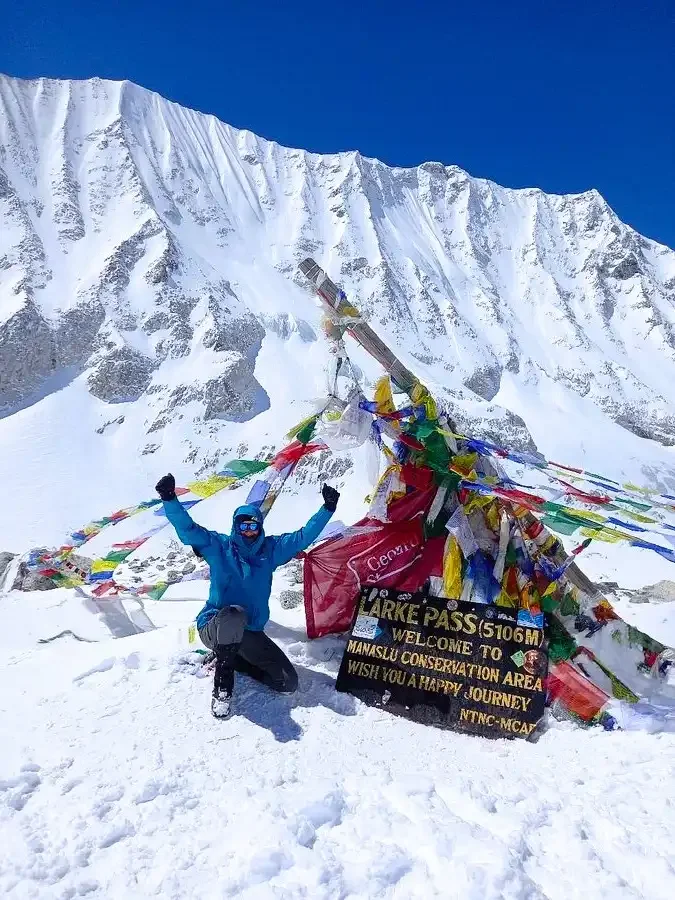
Larkya La Pass – The Highest and Most Challenging Point of the Manaslu Circuit Trek
Where Is Larkya La Pass Located?
Larkya La Pass is located in the Manaslu region of northern Nepal, within the Gorkha District. It is one of the highest points of the Manaslu Circuit Trek and sits at an altitude of 5,106 metres above sea level. The pass lies between the villages of Samdo and Bimthang, surrounded by some of the most beautiful mountain landscapes in the Nepal Himalayas.
During the Manaslu Circuit Trek, trekkers follow a trail through traditional villages, green forests, river valleys and high mountain settlements before reaching this famous pass. The route gradually moves towards the Tibetan border area, where the landscape becomes colder, drier and more rugged. After passing Samdo, trekkers reach Dharamsala, also known as Larkya Phedi. This is the last overnight stop before crossing the pass.
The crossing connects the high mountain area near Dharamsala with Bimthang on the western side of the pass. Trekkers usually start early in the morning, walking across rocky paths, snow-covered sections and glacial areas before reaching the top. From there, the trail descends towards Bimthang, where the landscape changes again with green pastures, forests and beautiful mountain views.
Larkya La Pass offers amazing views of several Himalayan peaks, including Himlung Himal, Cheo Himal, Kang Guru and Annapurna II. These mountains create a dramatic setting around the pass, making the crossing a special part of the journey.
Its location also makes Larkya La Pass an important part of the Manaslu trekking experience. It is not just a point on the map but a place where trekkers experience the true beauty and challenge of the high Himalayas. The long climb, cold mountain air and wide-open views make reaching this point a memorable moment for anyone walking the Manaslu Circuit.
How High Is Larkya La Pass?
Larkya La Pass stands at an altitude of 5,106 metres (16,752 feet) above sea level, making it one of the highest points of the Manaslu Circuit Trek. Reaching this height is a major achievement for trekkers, as the trail takes them deep into the high Himalayas, where the air becomes thinner and the mountain environment feels very different from the lower villages.
The pass is among the highest trekking passes in Nepal. Compared with other popular high mountain crossings, such as Thorong La Pass (5,416 metres) on the Annapurna Circuit and Kongma La Pass (5,535 metres) in the Everest region, it offers a different but equally memorable mountain experience. Its high location provides wide views of snow-covered peaks, glaciers and deep valleys.
During the Manaslu Circuit Trek, trekkers gain altitude gradually as they move from lower river valleys towards the Tibetan border. The route passes through villages such as Namrung, Samagaun and Samdo before reaching Dharamsala, also known as Larkya Phedi, at around 4,460 metres. From here, the trail climbs to the top of the pass, gaining more than 600 metres in elevation. This final climb can feel long and tiring, especially in cold weather and on snowy trails.
At this height, the amount of oxygen in the air is much lower than at sea level. Trekkers may feel short of breath, tired, dizzy or develop a headache. Some people also find it difficult to sleep or maintain their normal walking speed. These are possible signs of altitude sickness, which should never be ignored.
Proper acclimatization, slow walking, enough rest and regular water intake are important before attempting the crossing. Trekkers should follow their guide’s advice and allow their bodies enough time to adjust to the increasing altitude.
Standing at the top of Larkya La Pass at 5,106 metres is a special moment. After days of walking through remote mountain villages and high valleys, seeing the Himalayan peaks from this height gives trekkers a strong feeling of achievement.
How Difficult Is Crossing Larkya La Pass?
Crossing Larkya La Pass is one of the most challenging parts of the Manaslu Circuit Trek. It is a high mountain crossing at 5,106 metres, where trekkers face long walking hours, steep uphill sections, cold temperatures and changing trail conditions. Although it requires good physical fitness and mental strength, the experience is rewarding for those who prepare well.
The crossing day is usually the longest and most demanding day of the trek. Trekkers start early in the morning from Dharamsala, also known as Larkya Phedi, to make the most of the daylight and reach the pass before the weather changes. Depending on the trail and walking speed, reaching the top can take around 4–5 hours. After enjoying the mountain views, trekkers continue downhill towards Bimthang. The full walking day can take around 8–10 hours or even longer in difficult conditions.
The trail becomes more challenging as trekkers gain height. Some sections have steep climbs, loose rocks and narrow paths. During winter and early spring, snow and ice can cover parts of the route, making walking slower and more difficult. Strong winds and sudden weather changes can also make the crossing harder, especially near the top.
Trekkers do not need to be professional climbers to cross Larkya La Pass, but they should have good stamina and be comfortable walking for several hours each day. Previous high-altitude trekking experience is helpful, although beginners can also complete the crossing with proper preparation, a suitable itinerary and experienced guides.
Acclimatization is another important part of the journey. As the trail goes above 5,000 metres, the body needs time to adjust to the lower oxygen level. Rushing towards the pass can increase the risk of altitude sickness. Rest days, slow walking and following the guide’s advice help the body adjust to the height.
The climb can test your patience, especially when every step feels harder than the last. However, the feeling of reaching the top of Larkya La Pass after such a demanding walk makes the effort deeply meaningful.
What Is the Best Time to Cross Larkya La Pass?
Choosing the right season is important for crossing Larkya La Pass safely and enjoying the mountain views along the Manaslu Circuit Trek. The pass sits at 5,106 metres, where weather conditions can change quickly. Clear skies, stable weather and good trail conditions make the crossing easier, while heavy snowfall, strong winds and poor visibility can create serious challenges.
Spring (March to May) and autumn (September to November) are the two best seasons for this journey. During spring, the weather slowly becomes warmer, and the days are usually clear and comfortable for walking. March can still bring cold temperatures and snow around the pass, especially after winter snowfall. April and May generally offer better conditions, with longer daylight hours and good mountain views. The lower sections of the trail also become more colourful as flowers bloom and forests turn green.
Autumn is another excellent time to cross the pass. September may bring some remaining rain from the monsoon, but the weather usually becomes more stable from late September onwards. October is one of the most popular months for the Manaslu Circuit Trek because the skies are often clear, the mountain views are sharp, and the trails are generally dry. November also offers good trekking conditions, although temperatures drop quickly, especially in the early morning and at night.
Winter, from December to February, is much colder and brings a higher chance of heavy snowfall. Snow can cover the trail, making some sections difficult to identify and increasing the risk of slipping. Strong winds and freezing temperatures can also make crossing unsafe. During the monsoon, from June to August, rain, clouds and landslides can affect the lower trails and reduce visibility.
For comfortable weather and better trail conditions, October and early November are often the preferred months. April and early May are also good choices for spring trekking. However, conditions at Larkya La Pass can never be guaranteed, so trekkers should always check the latest weather forecast and follow their guide’s advice before attempting the crossing.
What Is the Larkya La Pass Crossing Day Like?
The day of crossing Larkya La Pass is one of the most exciting and demanding days of the Manaslu Circuit Trek. After spending several days walking through mountain villages, forests and high valleys, trekkers finally reach the day they have been preparing for. It is a long journey that requires an early start, steady walking and plenty of patience.
Most trekkers begin their day before sunrise from Dharamsala, also known as Larkya Phedi, which sits at around 4,460 metres. The morning air is extremely cold, and the ground may be covered with snow or ice. After breakfast, trekkers put on their warm clothes, check their gear and start walking with their guide. Starting early is important because the weather near the pass can change quickly, and strong winds often develop later in the day.
The first part of the trail follows a gradual climb across rocky mountain paths. As trekkers gain height, the landscape becomes more open, with glaciers, frozen lakes and snow-covered slopes all around. Some sections can be slippery, especially after fresh snowfall, so careful steps and proper trekking boots are important.
After several hours of walking, trekkers reach the top of Larkya La Pass at 5,106 metres. Colourful prayer flags often mark the pass, moving gently in the cold mountain wind. From this point, trekkers can enjoy wide views of Himlung Himal, Cheo Himal, Kang Guru and Annapurna II. It is a special moment to stop, take photographs and enjoy the feeling of reaching one of the highest points of the journey.
The walk does not end at the top. Trekkers still have a long downhill journey towards Bimthang. The descent can take several hours, passing through rocky paths, snow-covered slopes and beautiful mountain scenery.
For many people, crossing Larkya La Pass brings a mix of tiredness, happiness and pride. Every difficult step becomes part of a personal memory that stays with them long after leaving the mountains.
What Mountains Can You See From Larkya La Pass?
One of the best rewards of crossing Larkya La Pass is the wide view of the Himalayan mountains from the top. Standing at 5,106 metres, trekkers are surrounded by tall snow-covered peaks, glaciers and deep mountain valleys. The open landscape gives a feeling of being far away from busy towns and daily life, with nothing around but mountains, fresh air and the sound of the wind.
From the top of Larkya La Pass, trekkers can enjoy views of several beautiful Himalayan peaks. Himlung Himal, Cheo Himal, Kang Guru and Annapurna II are among the major mountains seen from this area. These peaks rise above the surrounding valleys, creating a dramatic view that makes the long climb feel worthwhile. On a clear day, their snow-covered slopes look especially beautiful under the bright mountain sky.
The area around the pass also has large glaciers, rocky ridges and wide snow-covered slopes. Depending on the season and recent snowfall, parts of the trail may remain covered in snow and ice. The natural beauty changes with the weather, giving trekkers a different experience each time they look towards the mountains. Early morning light often creates beautiful shades across the snowy peaks, making it a wonderful time for photography.
The landscape on both sides of Larkya La Pass is also quite different. On the Dharamsala side, the trail passes through dry, rocky mountain terrain with glaciers and high alpine slopes. After crossing the top and starting the descent towards Bimthang, the scenery gradually opens into wide valleys with green pastures, glacial streams and mountain forests at lower elevations. This change makes the journey even more interesting.
October and November are often good months for clear mountain views, while April and May also offer beautiful conditions. However, clouds, snowfall and strong winds can affect visibility at any time.
Trekkers should keep their cameras ready, but it is equally important to take a moment away from the screen and enjoy the mountains with their own eyes. The views from this high Himalayan pass are among the most memorable parts of the Manaslu Circuit Trek.
How to Prepare for Crossing Larkya La Pass?
Crossing Larkya La Pass at 5,106 metres requires good preparation, both physically and mentally. It is one of the most demanding sections of the Manaslu Circuit Trek, where trekkers face long walking hours, steep climbs, cold weather and thin air. You do not need to be a professional athlete, but preparing your body before the trek can make a big difference to your comfort and safety.
Physical training should begin at least 6–8 weeks before your journey. Regular walking, hiking, stair climbing and light jogging can help build stamina and improve leg strength. Try walking for 1–2 hours on different types of trails and gradually increase the distance. Squats, lunges and simple strength exercises can also help prepare your legs for long uphill and downhill sections. If possible, practise walking with a backpack similar to the one you will carry during the trek.
Acclimatization is another important part of preparation. As you move higher along the Manaslu route, your body needs time to adjust to the lower oxygen levels. Follow a suitable trekking itinerary with enough rest days, walk slowly and avoid rushing towards higher elevations. If you experience a headache, dizziness, nausea or unusual tiredness, inform your guide immediately.
Packing the right clothing and equipment is equally important. Temperatures near the pass can be freezing, especially early in the morning. Carry thermal innerwear, a warm fleece, a down jacket, waterproof outer layers, warm socks, gloves and a woollen hat. Good-quality trekking boots with a strong grip are essential for rocky, snowy and icy trails. Sunglasses help protect your eyes from strong sunlight reflecting off the snow. Trekking poles can also provide extra balance during steep climbs and descents.
Your body also needs enough energy for the crossing. Drink water regularly throughout the day and eat balanced meals with enough carbohydrates and protein. Carry some energy bars, nuts or chocolates for quick snacks during long walking hours.
Before attempting Larkya La Pass, listen carefully to your guide’s instructions and check the weather and trail conditions. Proper preparation, the right equipment and a flexible attitude can help you handle the challenges of this high mountain crossing with greater confidence.
Is Crossing Larkya La Pass Worth It?
Crossing Larkya La Pass is one of the biggest highlights of the Manaslu Circuit Trek. At an altitude of 5,106 metres, it offers a mix of physical challenge, beautiful mountain views and a strong feeling of achievement. Although the crossing can be tiring, many trekkers consider it one of the most rewarding parts of their journey through the Manaslu region.
One of the main reasons to cross this high mountain pass is the incredible Himalayan scenery. Along the way, trekkers can enjoy views of Himlung Himal, Cheo Himal, Kang Guru and Annapurna II. The landscape changes as the trail moves higher, from green forests and river valleys to dry mountain slopes, rocky paths and snow-covered glaciers. Standing at the top of Larkya La Pass, surrounded by tall Himalayan peaks, is a special experience that is difficult to describe in words.
The journey is also about more than mountains and high-altitude walking. The Manaslu region is home to traditional villages influenced by Tibetan culture. During the trek, you pass through places such as Lho, Samagaun and Samdo, where you can see traditional stone houses, Buddhist monasteries, prayer wheels and colourful prayer flags. Meeting local people and learning about their mountain lifestyle adds a deeper meaning to the experience.
However, crossing the pass is not easy for everyone. The long walking hours, steep climbs, cold temperatures and high altitude require good fitness and mental strength. Trekkers should be comfortable walking for several hours each day and should allow enough time for acclimatization. Previous high-altitude trekking experience can be helpful, but beginners with proper preparation and guidance can also attempt the journey.
For those who enjoy mountain adventures, natural beauty and cultural experiences, Larkya La Pass is worth the effort. The feeling of reaching 5,106 metres after days of walking through remote mountain trails creates a memory that stays with you long after returning home.


