
Badal Dada Mardi Himal – A Peaceful View Above the Clouds
Where Is Badal Dada Mardi Himal and Why It Is Special
Badal Dada Mardi Himal is a quiet viewpoint located along the well-known Mardi Himal trekking route in the Annapurna region of Nepal. This place sits on a green hill above small villages and forests, offering wide open views of clouds and mountains. Many trekkers walk close to this area while going to Mardi Himal Base Camp, but only a few take time to stop and enjoy this peaceful spot. That is what makes Badal Dada Mardi Himal feel special and different from other viewpoints.
Badal Dada is located not very far from Pokhara, which is one of the main tourist cities in Nepal. From Pokhara, trekkers usually drive for a few hours to reach the starting point of the Mardi Himal trek, such as Kande or Phedi. From there, it takes one to two days of walking to reach the area around Badal Dada, depending on the route and walking speed. Nearby villages like Forest Camp, Low Camp, and High Camp are often used as resting places. These villages give basic food and lodges and help trekkers enjoy local life along the trail to Badal Dada Mardi Himal.
The name “Badal Dada” has a simple and beautiful meaning. In Nepali, “Badal” means cloud and “Dada” means hill. Together, the name means hill of clouds. This name fits the place very well. Early in the morning and sometimes in the evening, thick white clouds move slowly below the hill. When you stand there, it feels like you are floating above the clouds. This cloud view is one of the main reasons people love visiting Badal Dada Mardi Himal.
One important reason why this place is special is because it is less crowded than many famous viewpoints in Nepal. Places like Poon Hill or Sarangkot get very busy during trekking seasons. Badal Dada is still a hidden spot, so only trekkers on the Mardi Himal route visit it. Fewer people mean more silence, more space, and more time to enjoy nature without noise. This calm feeling is hard to find in busy trekking areas, which makes Badal Dada Mardi Himal a good choice for people who want peace.
The environment around Badal Dada is clean and natural. The air feels fresh because of the surrounding forests and open hills. Rhododendron trees, birds, and mountain views make the walk pleasant. When the weather is clear, you can also see peaks from the Annapurna range standing quietly in the distance. Sitting on the hill, breathing fresh air, and watching clouds move slowly creates a deep sense of calm. Because of its location, beauty, and peaceful feeling, Badal Dada Mardi Himal remains a special place for trekkers who enjoy simple and meaningful mountain experiences.
Best Time to Visit Badal Dada Mardi Himal for Clear Views
Choosing the right time to visit Badal Dada is very important if you want clear mountain views and beautiful clouds. The weather in the Annapurna region changes with the seasons, and some months are much better than others. When the sky is clear, the views from Badal Dada Mardi Himal become wide and peaceful, making the walk more enjoyable and safe.
Spring and autumn are the best seasons to visit this area. Spring usually starts from March and lasts until May. During this time, the weather is mostly clear, and the hills are covered with green forests and colorful rhododendron flowers. The days are warm, and the nights are not too cold. Autumn runs from September to November and is another perfect season. After the monsoon rain ends, the sky becomes clean and blue. Mountain views look sharp and bright, which makes walking to Badal Dada Mardi Himal very pleasant.
Mornings are the best time of the day to enjoy the cloud views at Badal Dada. Early in the morning, clouds often stay below the hill, forming a soft white sea. When the sun rises, the light slowly touches the clouds and nearby mountains. This time feels calm and quiet, with very little wind or noise. By late morning or afternoon, clouds often rise higher and may block the views. That is why many trekkers wake up early to enjoy the peaceful beauty of Badal Dada Mardi Himal.
Weather conditions in this area are usually friendly during the best seasons, but they can still change quickly. In spring and autumn, days are mostly sunny with light wind. Temperatures are comfortable for walking, especially during the daytime. At night, it can feel cold, so warm clothes are needed. Even on clear days, sudden clouds can come, so it is important to be prepared while hiking around Badal Dada Mardi Himal.
Some months are not good for visiting due to heavy rain or fog. The monsoon season from June to August brings a lot of rain. Trails become muddy and slippery, and clouds often cover the hills all day. Views are mostly blocked, and walking becomes difficult. Winter months from December to February can also be challenging. During this time, fog, snow, and cold wind are common. While winter can be quiet, clear views are not guaranteed, especially at Badal Dada Mardi Himal.
Checking the weather before hiking is very important. Mountain weather can change fast, even during good seasons. Before starting the trek, it is wise to look at weather reports or ask local guides and lodge owners about current conditions. A clear morning can turn cloudy by afternoon. Proper planning helps trekkers choose the right day and time to enjoy clouds, mountains, and fresh air in a safe and comfortable way.
How to Reach Badal Dada Mardi Himal from Pokhara
Reaching Badal Dada is part of the beautiful journey along the Mardi Himal trekking route. Most travelers begin their trip from Pokhara, which is easy to reach from Kathmandu by road or flight. Pokhara is also the last major city with good hotels, shops, and transport services. From here, the path to Badal Dada Mardi Himal slowly moves from busy roads into quiet hills and forests.
From Pokhara, trekkers first travel by vehicle to the trail starting point. The most common starting places are Kande or Phedi. Kande is around one and a half hours by jeep or taxi from Pokhara, while Phedi takes a little less time. Both places are connected by local roads that pass through small towns and farmlands. The road is partly smooth and partly rough, especially near the end. During the rainy season, some sections can be muddy, so a four wheel drive vehicle is more comfortable for reaching the start of the trek to Badal Dada Mardi Himal.
Transport options from Pokhara include local buses, shared jeeps, or private vehicles. Local buses are cheaper and run daily, but they can be crowded and slow. Shared jeeps are faster and more comfortable and are popular with trekkers. Private jeeps give the most comfort and flexibility, especially for families or small groups. Choosing the right transport helps make the journey easier before starting the walk toward Badal Dada Mardi Himal.
The walking part of the journey starts after reaching the trailhead. From Kande or Phedi, the trail climbs gently through forests and small settlements. Walking time depends on where you stop each day. Most trekkers take two to three days to reach the area near Badal Dada. Daily walking time is usually five to six hours. The trail is not very technical, but it does have uphill sections that can feel tiring. Still, the path is well marked and safe for people with average fitness heading toward Badal Dada Mardi Himal.
Along the way, there are several common villages and resting places. Forest Camp is a popular stop surrounded by trees and quiet nature. Low Camp and High Camp are other places where trekkers often stay. These villages have simple lodges that provide food, warm drinks, and a place to rest. Staying in these villages helps trekkers adjust to the height and enjoy local hospitality while moving closer to Badal Dada Mardi Himal.
This trek is suitable for many types of people. Beginners with basic fitness can do this walk if they take their time and walk slowly. Families with older children can also enjoy the trek, especially if they choose shorter walking days. Because the trail is peaceful and not too crowded, it is a good option for people who want a calm mountain experience without long or difficult walking days.
What You See from Badal Dada: Clouds, Hills, and Mountains
Standing at Badal Dada feels like being on a quiet hill above the sky. This place is known for wide views and soft natural beauty. Many trekkers say the views from here are gentle and calming rather than loud or crowded. When you reach Badal Dada Mardi Himal, your eyes slowly move from clouds below to mountains far away, creating a peaceful mountain moment.
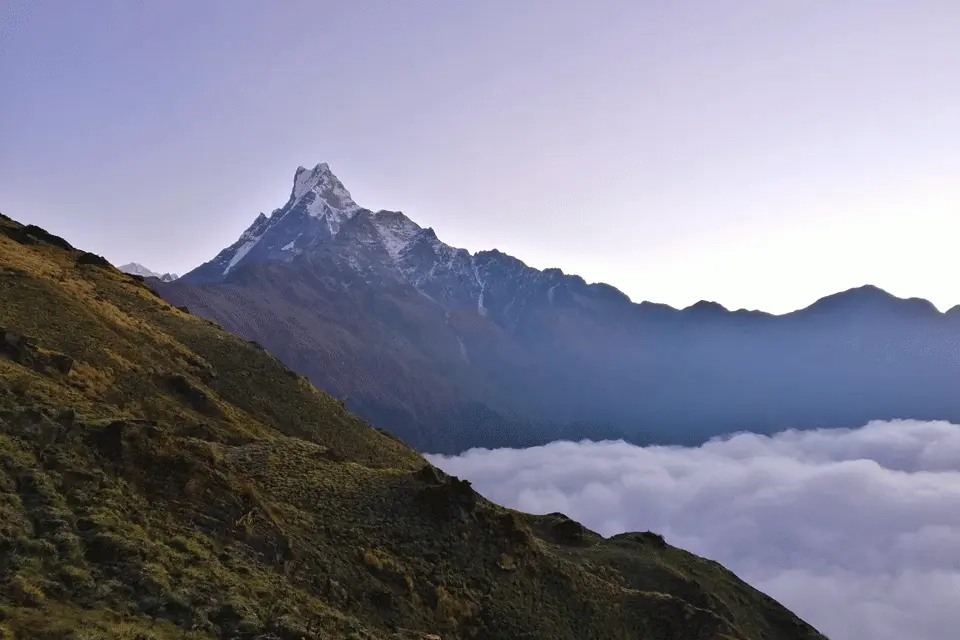
One of the most beautiful sights from this hill is the sea of clouds below. Early in the morning, thick white clouds settle in the valleys and cover the lower hills. From above, these clouds look like a soft blanket spreading far and wide. Sometimes the clouds move slowly like waves, changing shape with the wind. When the sky is clear, standing above this cloud layer at Badal Dada Mardi Himal gives a feeling of floating in the air.
Above the clouds, the mountains rise quietly. On clear days, you can see Mardi Himal standing close and strong. Behind it, parts of the Annapurna range appear with sharp lines and snowy tops. These mountains look even more beautiful when the light is soft in the morning or evening. The view is wide but not overwhelming, allowing trekkers to enjoy each peak slowly from Badal Dada Mardi Himal.
Sunrise and sunset are special times at this viewpoint. During sunrise, the first light touches the clouds and mountains with soft colors. The sky slowly changes from dark blue to warm orange and pink. At sunset, the hills and peaks turn golden for a short time before fading into shadow. Both times are quiet, with only the sound of wind and nature around. Watching the sun at Badal Dada Mardi Himal feels simple and meaningful.
The land around Badal Dada is covered with green hills and forests. Rhododendron trees, bamboo, and small plants grow along the slopes. During spring, flowers add gentle colors to the green landscape. Birds can often be seen flying above the trees or heard singing from the forest. These small natural details make the walk and the stay more enjoyable near Badal Dada Mardi Himal.
One of the strongest feelings at this place is calm and silence. There are no busy roads or loud crowds. The air feels clean, and the sound of nature feels close. Many people sit quietly, breathe slowly, and enjoy the moment. This peaceful feeling stays with trekkers even after they leave the hill. Spending time in such silence helps people connect with nature in a simple and natural way.
Tips for a Safe and Enjoyable Badal Dada Mardi Himal Trek
A trek to Badal Dada is peaceful and rewarding, but good preparation helps make the journey safe and comfortable. Simple planning and smart choices allow trekkers to enjoy nature without stress. These tips focus on basic needs and small habits that make walking to Badal Dada Mardi Himal more enjoyable.
Choosing the right clothes and shoes is very important. Weather in the hills can change quickly, even in good seasons. It is best to wear layered clothing so you can add or remove layers as needed. A light jacket keeps you warm in the morning and evening. Comfortable trekking pants help during long walks. Shoes should be strong and well fitted with good grip to handle forest paths and uphill sections. Warm socks and a hat are also useful when walking toward Badal Dada Mardi Himal.
Carrying enough water is necessary during the trek. Walking for several hours can make you tired and thirsty. A reusable water bottle is easy to carry and helps reduce plastic waste. You can refill water at lodges, but it is safer to use purification tablets or boiled water. Light snacks such as nuts, biscuits, or energy bars give quick energy during breaks. Eating small amounts while walking helps keep your strength steady on the trail to Badal Dada Mardi Himal.
Starting early in the morning gives many benefits. Morning time usually has clear skies and calm weather. This is the best time to see clouds sitting below the hills and mountains standing clear above them. Early starts also help you reach your destination before afternoon clouds or light rain appear. Walking in the cool morning air feels easier and more comfortable, especially when heading toward Badal Dada Mardi Himal.
Respecting nature and local culture is an important part of trekking in Nepal. Staying on the main trail helps protect plants and soil. It is good to carry back all trash and keep the area clean. When passing villages, greeting local people with a smile shows respect. Dressing modestly and speaking politely helps build a friendly connection with locals. These small actions help keep Badal Dada Mardi Himal clean and welcoming for future trekkers.
Going with a guide is helpful if you are unsure about the trail or new to trekking. A local guide knows the route, weather patterns, and safe places to stop. Guides also share knowledge about the area and local life, making the trek more meaningful. For solo trekkers or families, having a guide adds safety and confidence. This support allows you to relax and enjoy the journey while walking through the quiet beauty of Badal Dada Mardi Himal.