

Everest Base Camp Trek Altitude – A Simple Guide to Elevation by Day
Everest Base Camp Trek Altitude by Day: A Complete Itinerary Table
The Everest Base Camp trek takes you from the green hills around Lukla to the cold, rocky landscapes near the world’s highest mountain. As you walk from one village to another, the altitude rises, the air becomes thinner, and even simple activities can take more effort. Knowing the height of each stop helps you understand what lies ahead and prepare for the journey.
The Everest Base Camp Trek Altitude changes each day, and the trail does not always go uphill. Some sections include steep climbs followed by downhill walks. The itinerary also includes rest days in Namche Bazaar and Dingboche, giving your body time to adjust to the thinner air before you continue higher.
The table below shows the daily elevations for a typical 13-day itinerary, including the main overnight stops, important hiking points, and the highest places you will reach.
Everest Base Camp Trek Altitude by Day
| Day | Route or Activity | Starting Altitude | Ending or Highest Altitude | Elevation Change |
| 1 | Lukla to Phakding | 2,840 m (9,318 ft) | 2,651 m (8,700 ft) | Down 189 m |
| 2 | Phakding to Namche Bazaar | 2,651 m (8,700 ft) | 3,438 m (11,280 ft) | Up 787 m |
| 3 | Acclimatization in Namche Bazaar; optional Everest View Hotel hike | 3,438 m (11,280 ft) | 3,880 m (12,730 ft) | Up 442 m on the hike |
| 4 | Namche Bazaar to Tengboche | 3,440 m (11,286 ft) | 3,870 m (12,697 ft) | Up 430 m overall |
| 5 | Tengboche to Dingboche | 3,870 m (12,697 ft) | 4,360 m (14,304 ft) | Up 490 m |
| 6 | Acclimatization in Dingboche; optional Nangkartshang Peak hike | 4,360 m (14,304 ft) | Around 5,100 m (16,732 ft) | Up 740 m on the hike |
| 7 | Dingboche to Lobuche via Thukla Pass | 4,360 m (14,304 ft) | Around 4,940 m (16,207 ft) | Up around 580 m overall |
| 8 | Lobuche to Gorak Shep and Everest Base Camp; return to Gorak Shep | 4,940 m (16,207 ft) | 5,364 m (17,598 ft) | Up around 424 m to Base Camp |
| 9 | Gorak Shep to Kala Patthar, then Pheriche | Around 5,170 m (16,962 ft) | 5,545 m (18,192 ft) | Up 375 m to Kala Patthar, then descend |
| 10 | Pheriche to Tengboche | 4,288 m (14,068 ft) | 3,870 m (12,697 ft) | Down around 418 m |
| 11 | Tengboche to Namche Bazaar | 3,870 m (12,697 ft) | 3,440 m (11,286 ft) | Down around 430 m |
| 12 | Namche Bazaar to Lukla | 3,440 m (11,286 ft) | 2,860 m (9,383 ft) | Down around 580 m |
| 13 | Flight from Lukla to Kathmandu or Ramechhap | 2,860 m (9,383 ft) | Depends on landing point | Descend by air |
Note: Elevations and daily changes are approximate. The route, overnight stops, and exact altitude figures can vary by itinerary. Optional hikes are not required, and their highest points are not overnight sleeping elevations.
Important Altitude Points Along the Trek
The first major change comes when you reach Namche Bazaar at around 3,440 m (11,286 ft). This is where many trekkers begin to notice that breathing feels different, especially when walking uphill. The trail crosses 4,000 m when you reach Dingboche, where the landscape becomes more open and rocky, with fewer trees.
Beyond Dingboche, the trek enters a much higher mountain area. Lobuche and Gorak Shep sit close to or above 5,000 m, where the cold and thin air can make walking tiring. Everest Base Camp stands at 5,364 m (17,598 ft), while Kala Patthar reaches about 5,545 m (18,192 ft) on this itinerary.
These heights make the Everest Base Camp Trek Altitude an important part of your planning. Take each day at a steady pace, follow your guide’s advice, and never rush to reach a higher point. If you develop symptoms of altitude sickness, tell your guide promptly and do not continue climbing while unwell.
How High Is Everest Base Camp and Kala Patthar?
Reaching Everest Base Camp is a dream for many trekkers. The journey takes you through quiet Sherpa villages, rocky mountain paths, and deep valleys surrounded by some of the world’s tallest peaks. As you walk higher, the air becomes thinner, and every step can take more effort. Knowing the height of Everest Base Camp and Kala Patthar helps you understand what to expect before starting your trek.
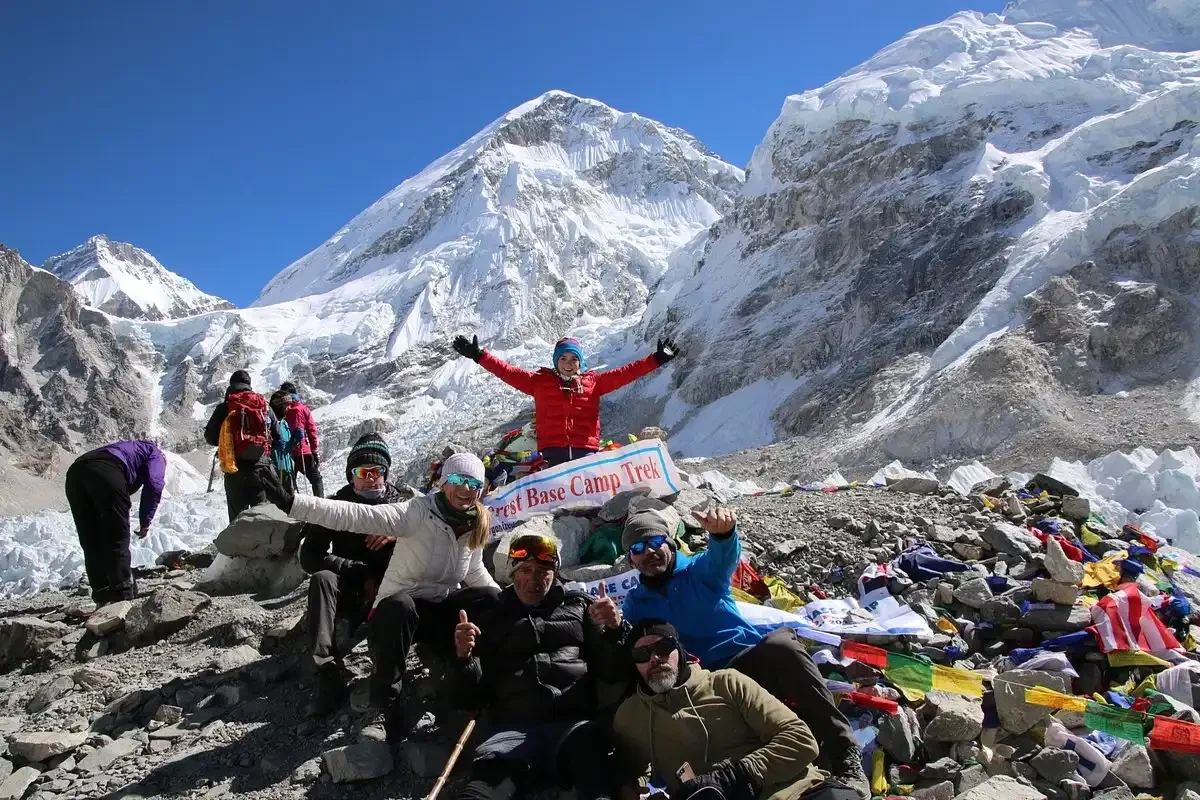
Everest Base Camp sits at 5,364 meters (17,598 feet) above sea level. It is the main destination for trekkers following the Everest Base Camp trail. Standing here feels special because you are surrounded by giant mountains and the famous Khumbu Icefall, where many climbing teams begin their journey toward the summit of Mount Everest.
However, reaching Everest Base Camp does not mean reaching the top of Mount Everest. The mountain summit is much higher, at 8,848.86 meters (29,031.7 feet). Trekkers visit Base Camp to enjoy the mountain setting, take photos, and experience the place where Everest climbing expeditions prepare for their climb.
Kala Patthar: The Highest Point of the Trek
Kala Patthar is a rocky hill above Gorak Shep and is one of the most famous viewpoints in the Everest region. On this itinerary, its elevation is approximately 5,545 meters (18,192 feet), making it the highest point reached during the trek. Some sources list slightly different elevations, so figures can vary by map and measurement.
Many trekkers climb Kala Patthar early in the morning to watch the sunrise over Mount Everest. As the first sunlight touches Everest, Nuptse, and Pumori, the mountains begin to glow in shades of gold. The climb is steep and tiring because of the thin air, but the wide mountain views make this moment unforgettable.
Unlike Everest Base Camp, Kala Patthar offers a clear view of the summit of Mount Everest on a good day. This is one reason many trekkers consider the climb a highlight of their journey.
Gorak Shep, Everest Base Camp, and Kala Patthar Altitude
Gorak Shep is the last overnight stop before the walk to Everest Base Camp. It lies at approximately 5,164–5,170 meters (16,942–16,962 feet), depending on the source. From here, trekkers walk to Base Camp and return to Gorak Shep before climbing Kala Patthar the next morning.
The Everest Base Camp Trek Altitude reaches its highest point at Kala Patthar on this itinerary. Although Everest Base Camp is the main destination, Kala Patthar stands slightly higher and offers a different mountain view.
The elevation of these places also explains why walking becomes harder near the end of the trek. At more than 5,000 meters, your body receives less oxygen with each breath than it does at lower elevations. Walking slowly, allowing time for acclimatization, and paying attention to your health are important parts of the journey.
Understanding the Everest Base Camp Trek Altitude before departure helps you prepare for the long walking days, cold mornings, and steep climbs. It also gives you a better idea of what makes reaching these high Himalayan places such a meaningful experience.
Altitude Gain on the Everest Base Camp Trek: From Lukla to Base Camp
The Everest Base Camp trek starts in Lukla, a small mountain town surrounded by green hills and tall peaks. From here, the trail leads through Sherpa villages, pine forests, river valleys, and rocky mountain paths before reaching Everest Base Camp. Along the way, the altitude rises slowly, and the landscape changes with every passing day.
Understanding the Everest Base Camp Trek Altitude helps you prepare for the physical challenge ahead. Walking at 2,800 meters feels very different from walking above 5,000 meters. The air becomes thinner as you climb, which means your body gets less oxygen with each breath. You may find yourself walking more slowly, taking extra breaks, and needing more time to complete a section of the trail.
From Lukla to Namche Bazaar
Lukla sits at around 2,840 meters (9,318 feet) above sea level. On the first day, you walk downhill to Phakding, which is around 2,651 meters (8,700 feet). This gentle start gives you time to settle into the mountain environment and enjoy the rivers, small villages, and suspension bridges along the trail.
The next day, the trail climbs to Namche Bazaar at approximately 3,440 meters (11,286 feet). This is one of the more challenging early sections because you gain around 790 meters in elevation. The final part includes steep paths and stone steps. You may feel tired or short of breath, but walking slowly and resting when needed can make the climb more manageable.
Climbing Higher Through Tengboche and Dingboche
After an acclimatization day in Namche Bazaar, the trail continues toward Tengboche at around 3,870 meters (12,697 feet). The path has both uphill and downhill sections, including a descent toward the river before a steep climb to the village. Tengboche is known for its famous monastery and beautiful views of Ama Dablam and other Himalayan peaks.
The next major stop is Dingboche, which stands at approximately 4,360 meters (14,304 feet). Here, you cross the 4,000-meter mark and enter a colder, more open landscape. Trees become fewer, the wind can feel stronger, and ordinary walking may require more effort. Another acclimatization day in Dingboche helps your body adjust before you continue higher.
From Lobuche to Everest Base Camp
Beyond Dingboche, the trail leads toward Lobuche at around 4,940 meters (16,207 feet), passing the Thukla Pass memorials. The land becomes rocky, and the air feels much thinner. From Lobuche, you continue to Gorak Shep at around 5,164–5,170 meters (16,942–16,962 feet), then walk to Everest Base Camp at 5,364 meters (17,598 feet).
The Everest Base Camp Trek elevation gain is not simply a steady climb. Some days include long uphill sections, while others involve steep descents and smaller climbs. Even when the distance looks short on a map, the high altitude can make the walk tiring.
For beginners, the key is to avoid rushing. Take regular breaks, drink enough water, eat well, and follow your guide’s advice. If you develop signs of altitude sickness, such as a headache, nausea, dizziness, or unusual weakness, tell your guide and do not continue climbing while unwell. The Everest Base Camp Trek Altitude makes the journey demanding, but a steady pace and proper acclimatization help you prepare for each stage of the trail.
Acclimatization Days on the Everest Base Camp Trek: Why They Matter
Acclimatization days are an important part of the Everest Base Camp Trek. As you walk higher into the mountains, the air becomes thinner, and your body gets less oxygen with each breath. You may feel tired more quickly, have a mild headache, or find it harder to sleep. Giving your body time to adjust helps you prepare for the higher parts of the trail.
Most Everest Base Camp itineraries include acclimatization days in Namche Bazaar and Dingboche. These breaks are not wasted days. They help reduce the risk of altitude sickness and allow you to enjoy the journey with more confidence. Proper Everest altitude adjustment is especially important before reaching places above 4,000 metres.
Why Acclimatization Days in Namche Bazaar Matter
Namche Bazaar sits at around 3,440 metres above sea level. It is an important stop where trekkers spend time adjusting to the mountain environment before heading towards higher villages.
During your rest day, you can take an optional hike to Everest View Hotel at around 3,880 metres, depending on the route and itinerary. The trail offers beautiful views of Mount Everest and other snow-covered peaks. Walking slowly uphill helps your body experience a higher altitude before returning to sleep at Namche Bazaar.
This follows a simple trekking method called “climb high, sleep low.” It means walking to a higher elevation during the day and returning to a lower place to sleep. This gradual process helps your body adapt to the changing altitude.
Acclimatization in Dingboche
Dingboche lies at around 4,410 metres, where the effects of altitude may become more noticeable. Even trekkers who feel strong at lower elevations can experience tiredness or shortness of breath here.
The rest day in Dingboche gives your body more time to adjust before continuing towards Lobuche and Everest Base Camp. Depending on your itinerary and physical condition, you may take an optional hike to Nangkartshang Peak, which reaches around 5,100 metres on commonly used routes.
The climb can be challenging, but the mountain views make the effort rewarding. Walk at a comfortable pace, take breaks when needed, and return to Dingboche to sleep at a lower elevation. Your guide can help decide whether this hike is suitable for you.
Do You Need to Stay Indoors on Rest Days?
Rest days on Everest Base Camp Trek do not always mean staying inside your teahouse all day. Gentle walking, short hikes, drinking enough water, eating regular meals, and getting proper sleep can all be part of your acclimatization plan.
However, avoid pushing yourself too hard just to reach a viewpoint. The goal is to help your body adjust, not to set a speed record. Follow your guide’s advice and pay attention to how you feel.
If you develop a headache with nausea, dizziness, unusual weakness, or other signs of altitude sickness, tell your guide promptly. Do not continue climbing while symptoms are getting worse. Severe symptoms, such as confusion, difficulty walking straight, or breathlessness while resting, require urgent medical attention and descent.
Good Everest Base Camp Trek acclimatization gives you a better chance of enjoying the mountain scenery, meeting local Sherpa communities, and appreciating each step of the journey without putting unnecessary pressure on your body.
Altitude Sickness on the Everest Base Camp Trek: Signs and Prevention
Walking towards Everest Base Camp is a special experience. You pass through beautiful Sherpa villages, cross suspension bridges, and see mountains that rise above the clouds. However, as you climb higher, the air contains less oxygen, and your body needs time to adjust. This is why altitude sickness is something every trekker should understand before starting the journey.
Altitude sickness can affect anyone, even people who are young, fit, and experienced in trekking. It can begin at elevations above 2,500 metres, although the risk varies from person to person. As the Everest Base Camp Trek Altitude increases, your body may find it harder to get the oxygen it needs. Walking too high too quickly can increase the risk, so a slow and well-planned journey is important.
Common Signs of Altitude Sickness
The early symptoms of altitude sickness can feel like ordinary tiredness after a long day of walking. However, it is important not to ignore them, especially when you are far from a hospital.
Common symptoms of altitude sickness include:
– Headache that develops after gaining altitude
– Nausea or feeling like you may vomit
– Dizziness or feeling light-headed
– Unusual tiredness or weakness
– Loss of appetite
– Difficulty sleeping
A headache combined with other symptoms after reaching a higher elevation may be a sign of acute mountain sickness (AMS). Not everyone experiences the same symptoms, and they can begin even when you follow a careful trekking plan.
How to Prevent Altitude Sickness on Everest
Preventing altitude sickness on Everest starts with giving your body enough time to adjust. A well-designed itinerary should include gradual elevation gains and acclimatization days in places such as Namche Bazaar and Dingboche.
Walk at a steady pace and avoid rushing to keep up with faster trekkers. Drink water regularly, eat enough food, and get proper rest. Follow your guide’s advice about daily walking distances and when to take breaks. Remember that being physically fit does not make you completely safe from altitude sickness.
Your Everest Base Camp Trek Altitude plan should allow enough time for acclimatization rather than focusing only on reaching the destination quickly. Avoid ascending to a higher sleeping altitude when your body is struggling to adjust.
What Should You Do If Symptoms Get Worse?
If you develop a headache, nausea, dizziness, or unusual tiredness, tell your guide as soon as possible. Do not hide your symptoms because you want to reach Everest Base Camp. Your guide needs to know how you feel to help make a safe decision.
If symptoms continue or become worse, stop ascending and seek medical advice. Do not continue to a higher altitude until you have been assessed and are safe to do so. Medication may help in some cases, but it should not be used as a reason to keep climbing while symptoms worsen.
Severe altitude sickness can become life-threatening. Warning signs include difficulty walking straight, confusion, unusual drowsiness, or breathlessness while resting. These symptoms require urgent descent and medical help. Do not leave a seriously ill trekker alone or wait for the symptoms to disappear on their own.
The mountains will still be there, but your health must come first. Recognising Everest Base Camp altitude sickness early and responding quickly can make a major difference to your safety during the trek.
What to Expect at High Altitude: Weather, Breathing, and Trekking Tips
The higher you walk on the Everest Base Camp trail, the more you notice the difference in the air, weather, and your own body. The first few days may feel like a normal mountain walk, but the trail becomes more demanding as you move towards Lobuche, Gorak Shep, and Everest Base Camp. The mountains look closer, the views become more dramatic, and even simple tasks can take more effort.
Understanding the Everest Base Camp Trek Altitude helps you prepare for these changes. With the right clothing, a steady walking pace, and enough time to adjust, you can enjoy the journey without putting too much pressure on your body.
How Does Breathing Change at High Altitude?
As you climb higher, the air pressure drops. This means each breath provides less oxygen than it would at a lower elevation. You may notice that you breathe faster, your heart beats more quickly, and you need more breaks while walking uphill.
At Lobuche, around 4,910 metres, and Gorak Shep, around 5,140 metres, even a short climb can leave you feeling tired. The final walk to Everest Base Camp at about 5,364 metres can be challenging, especially after several days on the trail.
These changes are common, but you should not ignore unusual symptoms. Walk slowly, rest when needed, and tell your guide if you develop a headache, nausea, dizziness, or unusual weakness. Do not continue climbing if you feel unwell or your symptoms are getting worse.
Cold Nights, Strong Winds, and Bright Sunlight
The Everest Base Camp Trek weather can change quickly, especially in the higher parts of the Khumbu region. Days may begin with clear skies, but clouds, wind, or snowfall can make conditions colder within a short time.
Nights around Lobuche and Gorak Shep are often very cold, particularly in winter and during early spring. Temperatures can fall below freezing, so a warm sleeping layer, thermal clothing, gloves, a woollen hat, and a good down jacket are useful.
Sunlight can also feel surprisingly strong at high altitude. With less atmosphere above you, ultraviolet rays can damage your skin and eyes more easily. Wear sunglasses with proper UV protection, apply sunscreen to exposed skin, and use lip balm with sun protection. A hat also helps protect your face from direct sunlight.
Useful Tips for Trekking at High Altitude
A few simple preparations can make each walking day more comfortable.
– Dress in layers so you can add or remove clothing as the weather changes.
– Carry enough drinking water and sip it regularly throughout the day.
– Use comfortable trekking poles to improve balance on rocky paths and reduce pressure on your knees.
– Wear well-fitted trekking boots and warm socks to protect your feet.
– Keep a rain jacket and an extra warm layer in your daypack.
– Follow your acclimatization plan and avoid gaining altitude too quickly.
Good Everest Base Camp Trek tips are not about walking faster than other trekkers. They are about knowing your limits, listening to your guide, and giving your body enough time to adjust. When you respect the Everest Base Camp Trek Altitude, you can focus more on the quiet mountain trails, the kindness of local people, and the incredible views around you.
Why Choose Amble Himalaya for Your Everest Base Camp Trek
Trekking to Everest Base Camp is a dream for many people, but walking at high altitude also brings challenges. From changing weather and cold nights to breathing difficulties and altitude sickness, every part of the journey needs care and good planning. At Amble Himalaya, we understand that reaching Everest Base Camp is not only about arriving at the destination. It is also about feeling supported, staying safe, and enjoying the experience along the way.
A Trek Planned Around Acclimatization
The Everest Base Camp Trek Altitude rises gradually as you travel from Lukla towards the mountains. Our trekking itinerary includes acclimatization time in places such as Namche Bazaar and Dingboche, giving your body time to adjust before you continue higher. You may also take suitable day hikes to help with acclimatization, following the “climb high, sleep low” approach when conditions allow.
Experienced Guides Who Care About Your Safety
Our guides help you understand the trail, maintain a steady pace, and recognise possible signs of altitude sickness. Headaches, nausea, dizziness, and unusual tiredness should never be ignored. We encourage trekkers to speak openly about how they feel so that concerns can be addressed early. Health checks, first-aid support, and emergency planning are important parts of preparing for a high-altitude journey.
Support When the Mountain Weather Changes
The weather around Lobuche, Gorak Shep, and Everest Base Camp can change quickly. Cold temperatures, strong winds, bright sunlight, and unexpected snowfall can make walking more difficult. Our team helps you prepare for mountain conditions and reminds you to carry warm layers, UV-protection sunglasses, sunscreen, water, and suitable trekking equipment. Daily plans may need to change when weather or trail conditions affect safety.
A Comfortable and Well-Organised Journey
From arranging trekking permits and accommodation to organising meals, guides, and porters according to your package, we help manage the important details of your trip. This allows you to focus on the trail, the mountain views, and the local Sherpa culture instead of worrying about every arrangement.
Help When You Need It Most
Even with careful preparation, altitude-related problems can occur. If symptoms become worse, continuing uphill is not safe. Our team can help assess the situation and arrange appropriate medical assistance or evacuation when needed. Trekkers should also carry travel insurance that covers high-altitude trekking and emergency helicopter rescue.
At Amble Himalaya, we want you to experience the Everest Base Camp Trek Altitude with preparation, care, and confidence. Every trekker has a different pace, and we believe the journey should respect your health as much as your dream of seeing Everest up close.
Ready to plan your Everest Base Camp adventure? Visit our Everest Base Camp Trek package to explore the itinerary and contact our team about your travel dates.


