

The Sherpa Community of Nepal – Culture, Traditions, and Mountain Life
Introduction to the Sherpa Community
The Sherpa Community is one of the most well-known ethnic groups in Nepal. Sherpa people are famous around the world for their strong connection with the Himalayas, especially Mount Everest. They are known for their mountain climbing skills, warm hospitality, and rich cultural traditions. Many travelers visiting Nepal dream of meeting the Sherpa people during trekking and climbing journeys in the Everest region.
Most Sherpa families live in the eastern Himalayan region of Nepal, mainly in the Solu-Khumbu area. Popular villages like Namche Bazaar, Khumjung, Pangboche, and Tengboche are home to many Sherpa communities. These villages are surrounded by snow-covered mountains, green hills, rivers, and beautiful forests. Life in these high mountain areas can be difficult because of cold weather and rough landscapes, but Sherpa people have adapted to this environment for many generations.
The word “Sherpa” comes from two Tibetan words. “Shar” means east, and “Pa” means people. This means “people from the east.” Long ago, Sherpa ancestors migrated from eastern Tibet to Nepal and settled in the Himalayan regions. Over time, they built strong communities and developed a unique culture connected to the mountains and Buddhism.
The Sherpa Community became internationally famous because of mountain expeditions in the Himalayas. Sherpa guides and climbers have played an important role in helping trekkers and mountaineers explore high mountains safely. Their knowledge of mountain trails, weather, altitude, and survival in difficult conditions makes them highly respected around the world. Many famous Everest expeditions succeeded because of the hard work and experience of Sherpa climbers.
Today, the Sherpa Community is closely connected with trekking tourism in Nepal. Trekking routes like the Everest Base Camp Trek, Gokyo Lakes Trek, and Three Passes Trek pass through traditional Sherpa villages. During these treks, visitors can experience Sherpa culture, local food, monasteries, prayer flags, and mountain lifestyles. Tea houses and lodges run by Sherpa families are an important part of the trekking experience in the Everest region.
Besides mountaineering, Sherpa people are also known for their kindness, honesty, and simple way of life. Family and community are very important in Sherpa culture. Many Sherpa families still follow traditional customs and Buddhist practices that have been passed down for generations. Monasteries, mani walls, chortens, and prayer wheels can be seen in many Sherpa villages, showing the deep spiritual connection of the people with Buddhism.
The Sherpa Community is not only famous for climbing mountains. They are also known for protecting their culture, traditions, and Himalayan lifestyle. Their strong bond with nature and mountains makes them an important part of Nepal’s identity and tourism industry.
History and Origin of the Sherpa Community
The history of the Sherpa Community is closely connected with the Himalayan mountains and the movement of people from Tibet to Nepal many centuries ago. Sherpa people are believed to have migrated from eastern Tibet around 500 years ago. They crossed high mountain passes and slowly settled in the northern Himalayan regions of Nepal. Because of this migration, Sherpa culture still shares many similarities with Tibetan traditions, language, religion, and lifestyle.
The word “Sherpa” comes from the Tibetan language. “Shar” means east and “Pa” means people. Together, the meaning becomes “people from the east.” This name reflects the eastern Tibetan roots of the Sherpa people. Over time, the Sherpa Community built permanent settlements in Nepal and developed their own identity while keeping strong cultural connections with Tibetan Buddhism.
Most Sherpa families settled in the Solu-Khumbu region of northeastern Nepal, which is now known as the Everest region. Villages such as Namche Bazaar, Thame, Khumjung, Pangboche, and Tengboche became important Sherpa settlements. These villages were built in high mountain valleys surrounded by snowy peaks, rivers, forests, and glaciers. Life in these areas was not easy because of cold temperatures, difficult terrain, and limited farming land. Even with these challenges, Sherpa people learned how to survive and live comfortably in the mountains.
In the early days, the Sherpa Community mainly depended on farming, yak herding, and trade for their livelihood. They grew crops such as potatoes, barley, and buckwheat in the mountain fields. Yaks were very important animals because they helped carry goods across mountain trails and also provided milk, wool, and meat. Sherpa traders often traveled between Nepal and Tibet using old Himalayan trade routes. These trade journeys were long and difficult but played an important role in connecting mountain communities.
The Sherpa people became more widely known during the 20th century when foreign climbers started exploring the Himalayas. Their knowledge of mountain routes, high altitude conditions, and physical strength made them valuable partners for trekking and climbing expeditions. The world began to recognize the skills of the Sherpa Community during Mount Everest expeditions. Sherpa climbers helped carry supplies, guide mountaineers, and support climbing teams in dangerous mountain conditions.
One of the most famous moments in mountaineering history came in 1953 when Tenzing Norgay and Edmund Hillary successfully reached the summit of Mount Everest for the first time. This achievement brought global attention to the Sherpa people and their important role in Himalayan climbing.
Today, the Sherpa Community lives not only in the Everest region but also in other Himalayan areas of Nepal such as Helambu, Rolwaling, and parts of eastern Nepal. Even though tourism and modernization have changed many parts of mountain life, Sherpa people still continue to protect their language, traditions, religious practices, and strong connection with the Himalayas.
Sherpa Culture and Daily Lifestyle
The culture and daily lifestyle of the Sherpa Community are deeply connected with the Himalayan mountains. Sherpa families have lived in high mountain regions for many generations, and their daily life is shaped by nature, weather, traditions, and strong community bonds. Even today, many Sherpa villages in the Everest region continue to follow traditional ways of living while also adapting to modern tourism and education.
Most Sherpa families live in stone houses built to handle cold mountain weather. These homes are usually simple but warm and comfortable. Family members often live together under one roof, and respect for elders is an important part of Sherpa culture. Children grow up learning family traditions, religious values, and the importance of helping others in the community.
The Sherpa Community is also known for its warm hospitality. Visitors trekking in the Everest region often experience the kindness of Sherpa people in tea houses and lodges. Guests are treated with respect and welcomed with food, tea, and friendly conversation. This caring nature has made Sherpa hospitality famous among trekkers from around the world.
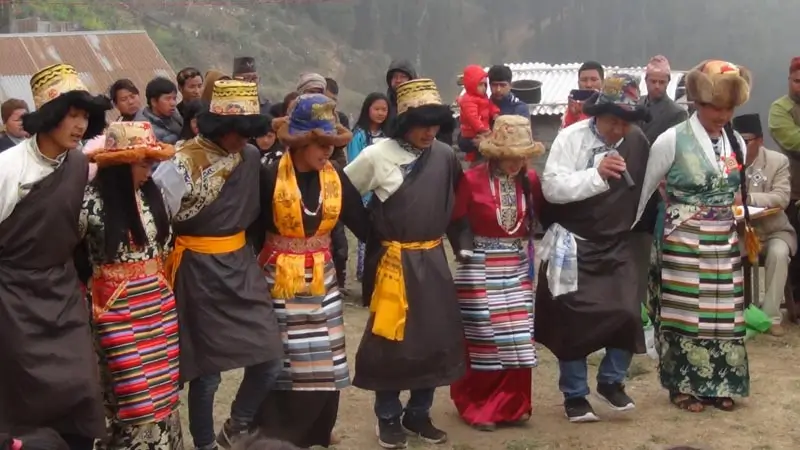
Traditional clothing is still seen in many Sherpa villages, especially during festivals and religious events. Sherpa men and women wear thick woolen clothes to stay warm in the cold mountain climate. Women often wear colorful aprons, jewelry, and long dresses, while men wear warm jackets and traditional robes. These clothes are designed for comfort and protection in high-altitude areas.
Food habits in the Sherpa Community are simple, healthy, and suitable for mountain life. Potatoes are one of the main foods because they grow well in high Himalayan regions. Sherpa families also eat barley, yak meat, rice, soups, noodles, and Tibetan bread. Butter tea, also known as salt tea, is a traditional drink commonly served in mountain homes and tea houses. This warm tea helps people stay energized in cold weather.
Farming and yak herding are important parts of traditional Sherpa life. Since farming land is limited in the mountains, Sherpa people grow crops carefully during suitable seasons. Potatoes, barley, and vegetables are commonly grown in terraced fields near villages. Yaks are very valuable animals in Himalayan communities. They help carry goods across mountain trails and provide milk, butter, wool, and meat. In many remote villages, yaks are still an important part of daily life and local transportation.
Mountain life has made the Sherpa Community physically strong and hardworking. Walking long distances on steep trails is a normal part of daily life for many Sherpa families. From a young age, children learn how to live in high-altitude conditions and help with household work, farming, and animal care. People wake up early, work together, and depend on each other during difficult weather conditions.
Religion also plays an important role in everyday Sherpa life. Most Sherpa people follow Tibetan Buddhism. Prayer flags, mani walls, chortens, and monasteries can be seen in almost every Sherpa village. Many families begin their mornings with prayers and religious rituals. Buddhist beliefs teach kindness, respect for nature, and peaceful living, which are important values in the Sherpa Community.
Religion, Festivals, and Traditions of the Sherpa Community
Religion plays a very important role in the daily life of the Sherpa Community. Most Sherpa people follow Tibetan Buddhism, which is a peaceful religion that teaches kindness, respect for nature, and compassion for all living beings. Their spiritual beliefs are deeply connected with the Himalayas, and many religious practices are part of their everyday routine.
In Sherpa villages, monasteries are very important places. These monasteries are not only religious centers but also places for learning and community gatherings. Monks live in these monasteries and spend their time praying, studying Buddhist teachings, and performing rituals. Famous monasteries like Tengboche Monastery in the Everest region are very important for the Sherpa Community and also attract many trekkers who visit to learn about their culture.
Prayer flags are another important symbol of Sherpa spirituality. These colorful flags are found on mountain passes, rooftops, and near monasteries. Sherpa people believe that when the wind blows through the flags, prayers and blessings are spread into the environment. Mani stones are also common in Sherpa villages. These stones are carved with Buddhist prayers and placed along trails. Travelers often walk past them as a sign of respect and spiritual connection.
The Sherpa Community follows many traditions that are connected with Buddhism and nature. Many Sherpa people begin their day with prayer and meditation. They believe that all living beings are connected, and they try to live a simple and peaceful life. Nature, especially mountains, rivers, and forests, is seen as sacred and respected deeply in Sherpa culture.
Festivals are a very important part of Sherpa life. One of the biggest festivals is Losar, which is the Sherpa New Year. It is celebrated with family gatherings, traditional food, prayers, dances, and visiting monasteries. During Losar, homes are cleaned and decorated, and people wear traditional clothes. It is a time of happiness, togetherness, and blessings for the new year in the Sherpa Community.
Another important festival is Mani Rimdu, which is celebrated mainly in the Everest region monasteries like Tengboche. This festival is a mix of religious ceremonies, mask dances, music, and prayers performed by monks. The dances represent stories of good winning over evil. Many local people and trekkers gather to watch this festival, making it an important cultural event for the Sherpa Community.
Traditions are passed down from generation to generation in Sherpa families. Respect for elders, community support, and spiritual values are taught from a young age. Important life events like birth, marriage, and death are also guided by Buddhist rituals and customs. Monks often play an important role in these ceremonies, offering prayers and blessings.
The Sherpa Community continues to preserve its religious beliefs and traditions even as modern life changes the Himalayan region. Their strong faith, cultural festivals, and deep respect for Buddhism make their way of life unique and closely connected to the mountains they call home.
The Role of the Sherpa Community in Himalayan Trekking
The Sherpa Community plays a very important role in Himalayan trekking and mountaineering in Nepal. Sherpa people are known around the world for their strength, endurance, and deep knowledge of high mountain regions. Because they have lived in the Himalayas for many generations, they understand the weather, terrain, and altitude better than most people. This makes them highly trusted partners in trekking and climbing journeys.
Sherpas became famous in mountaineering during the early expeditions to Mount Everest. Foreign climbers needed local support to explore the high mountains safely. Sherpa people helped by carrying heavy loads, finding safe routes, and setting up camps in dangerous areas. Over time, their role became very important for successful climbing expeditions. Today, the Sherpa Community is considered the backbone of Himalayan tourism.
One of the main roles Sherpas play is as trekking guides. Sherpa guides lead groups of trekkers through mountain trails, ensuring safety and proper direction. They are trained to handle difficult situations such as altitude sickness, sudden weather changes, and rough paths. Their experience helps trekkers feel safe and confident during their journey in the Himalayas.
Another important role is that of porters. Sherpa porters carry trekking equipment, food supplies, and camping gear across long mountain trails. The paths are often steep and challenging, but Sherpa porters make trekking possible for visitors by sharing the physical load. This support is one of the key reasons why trekking tourism in Nepal is successful. The Sherpa Community has built a strong reputation for being hardworking and reliable in these roles.
Sherpas are also highly respected climbers. Many Sherpa mountaineers have reached the summit of the world’s highest peaks, including Mount Everest. They work as high-altitude climbers, fixing ropes, carrying oxygen, and helping international teams reach the summit safely. Their courage and skill in extreme conditions are admired globally. Famous climbers from the Sherpa Community have made history in Himalayan mountaineering.
Tourism in Nepal depends heavily on Sherpa involvement. In the Everest region, many tea houses, lodges, and trekking services are operated by Sherpa families. They provide food, accommodation, and guidance to thousands of trekkers every year. This not only supports the tourism industry but also helps local communities earn a living and improve their quality of life.
The Sherpa Community also plays a key role in mountain safety. They monitor weather conditions, understand avalanche risks, and guide climbers through dangerous paths. Their knowledge of high-altitude survival is very important for reducing risks during expeditions.
Over the years, Sherpas have gained global respect for their contribution to Himalayan trekking and climbing. Their role is not just about physical strength, but also about experience, knowledge, and deep connection with the mountains. The trekking culture of Nepal would not be the same without the support and dedication of the Sherpa people.
Challenges and Modern Changes in the Sherpa Community
The life of the Sherpa Community is changing quickly in modern times. Earlier, Sherpa families mostly depended on farming, yak herding, and traditional trade. Today, tourism, education, and global connections have brought many new opportunities, but they have also created new challenges for mountain life.
One of the biggest changes is the growth of tourism in the Everest region and other Himalayan areas. The Sherpa Community now plays a major role in trekking and mountaineering services. Many young Sherpas work as trekking guides, porters, and lodge owners. This has improved income and living standards for many families. Roads, communication, and internet access have also made life easier in remote villages. Education opportunities have increased, and more Sherpa children are going to school and even studying in cities like Kathmandu.
At the same time, modernization has brought changes in traditional lifestyle. Many young people from the Sherpa Community are moving to cities or even going abroad for better education and jobs. This migration sometimes leads to fewer people staying in villages, which can affect traditional farming and cultural practices. Some old customs and local skills are becoming less common among younger generations.
Climate change is another serious challenge for the Sherpa people. The Himalayan environment is very sensitive, and rising temperatures are affecting snow patterns, glaciers, and weather conditions. Glacial melting can increase risks like floods and landslides in mountain areas. These changes also make trekking and climbing more unpredictable. The Sherpa Community, which depends on the mountains for both life and livelihood, is directly affected by these environmental changes.
Tourism, while helpful for the economy, also brings pressure on local resources. Increased number of trekkers means more waste, more use of firewood, and more demand for food and accommodation. In some areas, this can affect the natural environment and traditional way of living. The Sherpa Community is working with local organizations and conservation groups to manage these issues through better waste management and eco-friendly tourism practices.
Despite these challenges, Sherpa people are actively working to preserve their culture and traditions. Monasteries, festivals, and local customs are still strongly followed in many villages. Schools in Sherpa areas also teach children about their language, history, and cultural identity. Many families try to balance modern education with traditional values so that the younger generation stays connected to their roots.
The Sherpa Community is also becoming more involved in leadership roles in tourism and conservation. Some Sherpas are working as environmental activists, guides, business owners, and community leaders. They are helping to protect the Himalayas while also improving living conditions for local people.
Even with modernization and global influence, Sherpa people continue to maintain their strong connection with the mountains. Their way of life is slowly changing, but their cultural identity, values, and respect for nature remain an important part of who they are.
The Strength and Spirit of the Sherpa Community
The Sherpa Community is one of the most respected and inspiring communities in the world. Their life is deeply connected with the Himalayas, and their contribution to trekking and mountaineering in Nepal is truly special. From the highest mountains to the smallest villages, Sherpa people have shown strong dedication, hard work, and courage in every part of their life.
For many generations, the Sherpa people have lived in very difficult mountain conditions. Cold weather, steep hills, and limited farming land have never stopped them from building strong and peaceful communities. Instead of giving up, they learned how to survive and grow in these harsh environments. This shows their great strength and determination. The Sherpa Community has always found ways to live in balance with nature while keeping their culture alive.
Their role in Himalayan trekking and climbing is admired all over the world. Sherpa guides, porters, and climbers have helped thousands of trekkers and mountaineers reach their goals safely. Without their knowledge of the mountains, many Everest expeditions would not have been successful. Their courage in dangerous conditions, especially at high altitude, shows how strong and experienced they are. The Sherpa Community is often called the backbone of Himalayan tourism because of this important contribution.
Beyond their work in tourism, Sherpa people are also known for their kindness and hospitality. Visitors in the Everest region often feel welcomed and safe in Sherpa villages. Their warm behavior, simple lifestyle, and respect for guests make every journey more meaningful. This human connection is one of the most beautiful parts of Sherpa culture.
Another important strength of the Sherpa people is their strong cultural and spiritual values. Even with modern changes, they continue to follow their traditions, festivals, and Buddhist beliefs. They respect nature, mountains, and all living beings. This deep spiritual connection guides their daily life and helps preserve their identity.
The Sherpa Community also plays an important role in protecting the Himalayan environment. Many Sherpas are now working in eco-tourism, conservation, and education. They are helping to keep the mountains clean and safe for future generations while also improving life for local people.
Overall, the Sherpa people are a true symbol of strength, simplicity, and dedication. Their hard work, bravery, and kindness have made Nepal proud on the global stage. The story of the Sherpa Community is a reminder of how deeply human life can be connected with nature, mountains, and culture, and how important it is to respect and preserve this beautiful heritage.


